
Private Equity 30A Real Estate Strategies to Maximize Returns
finance Darren Koenenn December 9, 2025
finance Darren Koenenn December 9, 2025
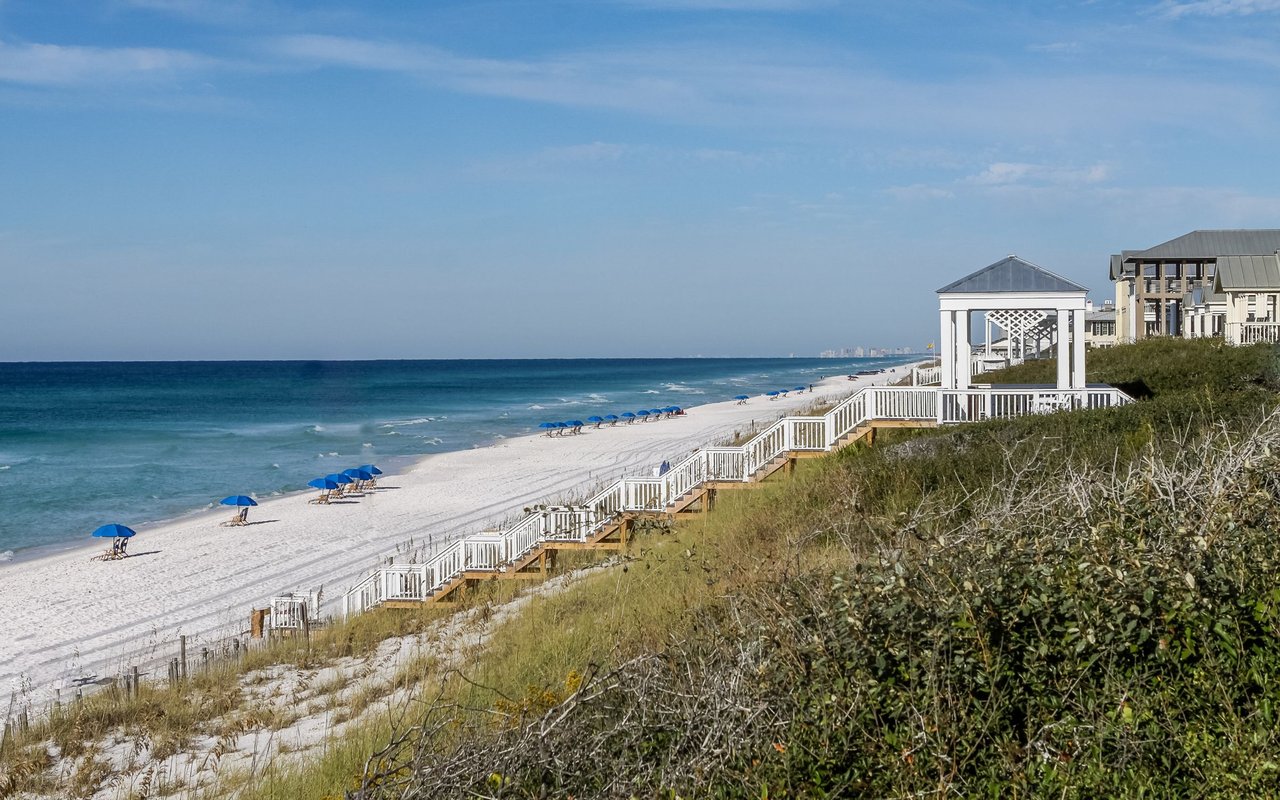
The 30A corridor along Florida’s Emerald Coast has evolved from a boutique vacation market into a mature investment ecosystem offering institutional-grade opportunities. With sustained demand from high-net-worth buyers, constrained supply, and robust short-term rental economics, 30A represents one of the most asymmetric return environments in U.S. coastal real estate.
For private equity investors, this market offers a rare blend of income stability, asset appreciation, and portfolio diversification. The key lies in approaching 30A not as a speculative play, but as a strategically structured investment thesis integrating operational efficiency, disciplined leverage, and thoughtful exit planning.
Below are seven powerful, data-backed strategies for maximizing returns in 30A real estate.
The rise of professionally managed short-term rentals (STRs) has redefined how institutional capital accesses vacation markets. On 30A, branded homes in Rosemary Beach, WaterColor, and Alys Beach can command gross yields of 8–10% annually with occupancy rates exceeding 70%.
Private equity investors can deploy a roll-up strategy, aggregating high-performing STR assets under a single management platform. This approach enhances operational scalability, pricing power, and exit optionality—positioning the portfolio for recapitalization or sale to institutional REITs.
Key Metrics to Target:
Gross yield: 7–10%
ADR (Average Daily Rate): $900–$1,200 peak season
IRR potential (unlevered): 12–15% over 5 years
Access to quality land and permitting along 30A is tightly controlled. For private equity, partnering with locally entrenched developers offers asymmetric upside while minimizing execution risk.
These joint venture structures (JVs) allow funds to provide equity capital and institutional governance, while local partners manage entitlements, design, and construction. Preferred equity or promote structures can further align incentives and enhance risk-adjusted yield.
Strategic Rationale:
Access to scarce, high-value land
Localized execution expertise
Targeted levered IRR: 18–22%
Land scarcity and brand perception make 30A an ideal environment for high-margin boutique developments. Projects with 6–12 ultra-luxury residences or villas deliver exclusivity, allowing for premium pricing and accelerated absorption.
Private equity capital can be deployed in phased developments, recycling equity through partial sales while retaining ownership of the management entity. Incorporating sustainable design and high-end amenities further strengthens pricing power.
Sample Capital Stack:
30% LP equity (private equity fund)
20% GP equity (local developer)
50% senior construction debt
Many properties along 30A were built prior to the 2010s and underutilize their market potential. Repositioning legacy condos into branded hospitality or fractional ownership models can create significant value arbitrage.
Adaptive reuse strategies often enjoy accelerated permitting and reduced development risk, as land entitlements are already in place. A well-executed repositioning can deliver equity multiples of 2.0x–2.5x over a medium-term horizon.
30A’s success lies not only in its beaches, but in its walkable, experiential communities, a new urbanism design principle prized by high-income buyers. Investments in mixed-use assets integrating retail, dining, and hospitality components can deliver diversified revenue streams and superior long-term appreciation.
Private equity investors can co-invest in village-scale projects that merge lifestyle and luxury, capturing multiple layers of monetization: lease income, hospitality operations, and residential sales.
Example: A mixed-use retail and villa concept in Alys Beach or Seaside could yield:
Blended IRR: 15–18%
Stabilized cap rate: 5.5%
Embedded appreciation: 6–8% annually
Tax optimization is a cornerstone of private equity real estate performance. In Florida, where there is no state income tax, investors can enhance after-tax returns through 1031 exchanges and cost segregation depreciation strategies.
Additionally, using moderate leverage (55–65% LTV) with long-term fixed-rate debt can improve cash-on-cash yields while maintaining downside protection against market volatility.
Key Focus Areas:
Entity structuring: LPs, REIT feeders, or Delaware Statutory Trusts
Holding period optimization: 5–10 years for capital gains treatment
Target post-tax IRR: 14–17%
An attractive feature of 30A is its institutional inefficiency. The market remains fragmented with limited participation from national funds. For private equity groups, this presents an opportunity to aggregate, stabilize, and institutionalize assets ahead of eventual REIT or fund sales.
Potential exit strategies include:
Portfolio sale to hospitality REITs or family offices
Recapitalization with long-term core-plus funds
Partial asset disposition while retaining management income
This “build-to-hold” approach allows investors to capture both current income and appreciation-driven alpha, positioning the portfolio for premium valuations at exit.
30A real estate offers private equity investors an extraordinary convergence of demand stability, limited supply, and brand-driven appreciation. Unlike other resort markets, 30A’s appeal is structural, not cyclical — underpinned by generational wealth migration to Florida, flexible work trends, and a deep lifestyle premium.
The most successful investors on 30A will be those who combine institutional rigor with localized execution, deploying capital through structured joint ventures, strategic redevelopments, and yield-oriented short-term rental platforms.
In an environment where traditional alpha is increasingly elusive, 30A remains a frontier market where disciplined private equity can outperform not through speculation, but through precision, patience, and scale.
30A offers a rare blend of high demand, limited supply, and premium pricing power. The market benefits from steady tourism, affluent demographics, and restricted coastal zoning. This scarcity dynamic supports long-term asset appreciation and consistent rental yields, making it one of the most resilient coastal submarkets in the U.S.
Depending on the investment strategy:
Institutional short-term rentals: 12–15% unlevered IRR
Boutique developments and JVs: 18–22% levered IRR
Value-add repositioning: 2.0–2.5x equity multiple
Actual performance varies based on leverage, execution, and market timing, but these figures represent institutional underwriting ranges consistent with 30A comparables.
The most effective structure is a joint venture (JV) with a reputable local developer or operator. This provides local execution capability, risk sharing, and access to scarce land. Investors often utilize preferred equity or promote structures to optimize upside participation while maintaining governance control.
Yes. While certain municipalities in Florida have introduced rental restrictions, Walton County (30A) remains favorable toward short-term rentals when properties are properly licensed. Investors should engage experienced property management and compliance partners to ensure full regulatory adherence.
Sustainability is increasingly a value driver, not just a compliance issue. Energy-efficient construction, resilient materials, and green certifications (e.g., LEED, ENERGY STAR) can command 5–10% higher resale premiums and lower operating costs, both critical to long-term NOI growth and valuation.
Florida offers no state income tax, favorable depreciation schedules, and access to 1031 exchanges. These mechanisms significantly improve post-tax IRR. Investors can further optimize returns through cost segregation studies to accelerate depreciation benefits.
Typical exits include:
Portfolio sale to institutional REITs or family offices
Recapitalization with long-term core-plus capital
Partial disposition of stabilized assets while retaining management income
Because of the region’s liquidity and buyer depth, investors enjoy multiple exit pathways even during slower national cycles.
Key risks include hurricane exposure, supply chain delays, and seasonal volatility in tourism-driven revenues. However, these are mitigated by strong insurance frameworks, conservative leverage, and a robust year-round luxury demand base. A disciplined acquisition and due diligence process minimizes these exposures.
Despite increased investor attention, 30A remains institutionally under-penetrated. The market is dominated by high-net-worth individuals and local developers. This fragmentation provides private equity investors an opportunity to institutionalize fragmented assets, achieve operational scale, and capture alpha through aggregation.
The outlook remains fundamentally bullish. Migration trends, remote work flexibility, and lifestyle-driven relocation to Florida continue to drive both occupancy and appreciation. With proper structuring, 30A offers private equity investors long-term, risk-adjusted returns that outperform traditional urban markets.
Stay up to date on the latest real estate trends.





We pride ourselves in providing personalized solutions that bring our clients closer to their dream properties and enhance their long-term wealth. Contact us today to discuss all your real estate needs!
KOENENN GROUP
2048 W COUNTY HIGHWAY 30A STE 107 SANTA ROSA BEACH FL 32459